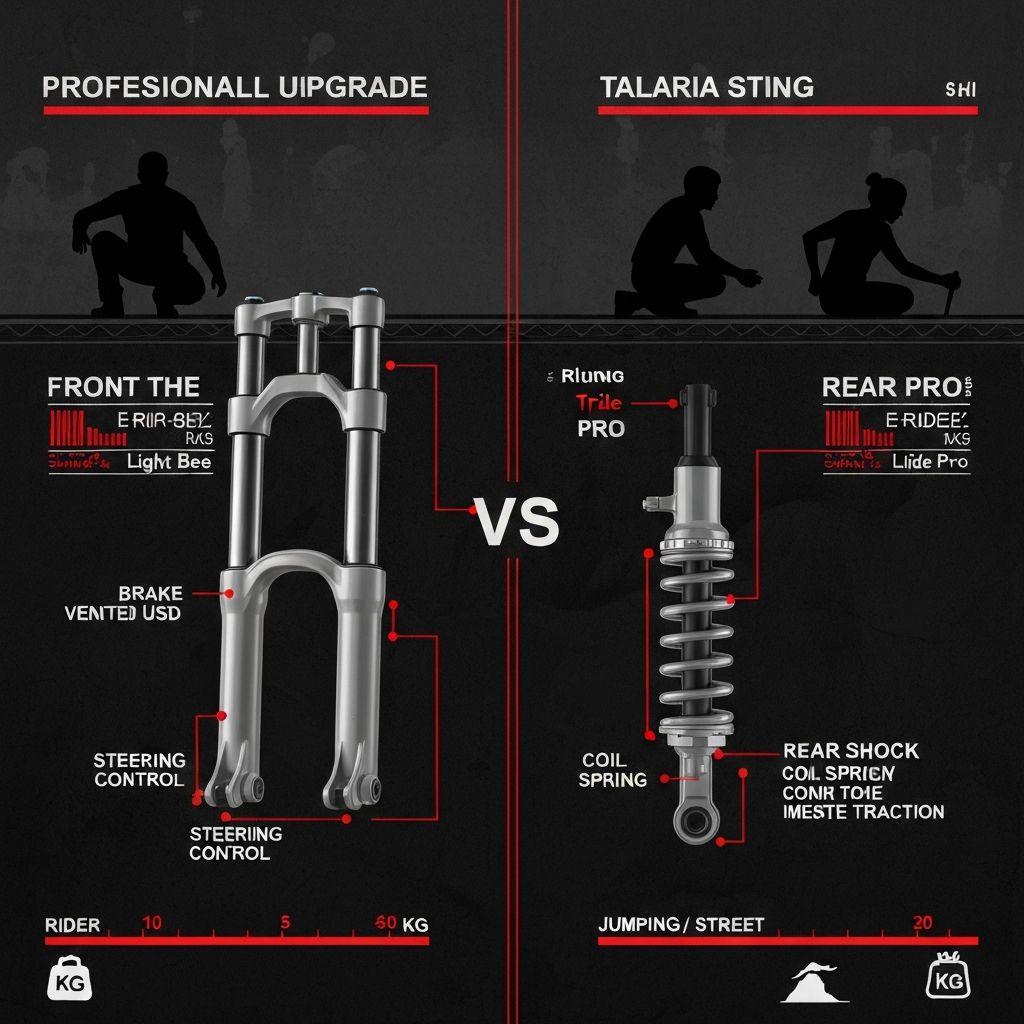
- Should I Upgrade the Fork or Rear Shock First?
- Why Upgrade Order Matters
- Quick Answer: Fork or Rear Shock First?
- When to Upgrade the Rear Shock First
- Your Bike Bottoms Out on Landings
- You Are a Heavy Rider
- The Rear Kicks or Packs Down
- You Ride Hard Off-Road
- When to Upgrade the Front Fork First
- You Feel Too Much Brake Dive
- The Front End Feels Harsh or Bouncy
- You Ride Street and Light Trails
- Your Current Fork Is Too Soft for Your Weight
- Street Riding vs Trail Riding vs Jumping
- Street Riding
- Trail Riding
- Jumping
- Heavy Riders
- Fastace Fork and Rear Shock Options
- Fastace Fork Upgrade
- Fastace Rear Shock Upgrade
- Fork and Shock Together
- Budget Upgrade Strategy
- Final Recommendation
- References
Fork or Rear Shock First? Best Suspension Upgrade Order for Sur-Ron, Talaria and E-Ride Pro
Not sure whether to upgrade the fork or rear shock first? Learn the best suspension upgrade order for Sur-Ron, Talaria and E-Ride Pro based on street riding, trails, jumps, heavy riders and budget.
If you ride a Sur-Ron, Talaria or E-Ride Pro and have a limited suspension budget, the first upgrade should depend on how you ride.
Street riders may only need fork tuning or a spring adjustment. Heavy riders and jump riders often expose rear shock weakness earlier. Trail riders usually need front and rear balance.
This guide explains when to upgrade the front fork first, when to upgrade the rear shock first, and how Fastace fork and rear shock options fit into a practical e-moto suspension upgrade plan.
Should I Upgrade the Fork or Rear Shock First?
If you own a Sur-Ron, Talaria or E-Ride Pro, sooner or later you may ask the same question: Should I upgrade the fork or rear shock first?
This is one of the most practical questions in e-moto suspension. Riders search for fork or rear shock first because they usually have a limited budget and want the biggest improvement without replacing everything at once.
The answer depends on your riding style.
If you mainly ride street, you may not need a major suspension upgrade immediately. If you ride hard off-road, hit jumps, carry more rider weight or feel the bike bottoming out, the rear shock may become the weak point earlier. If your bike dives badly under braking or feels unstable in the front, the fork should be your first target.
Why Upgrade Order Matters
A full fork and rear shock setup is the best solution for serious riding, but not every rider wants to spend that much at once.
That is why upgrade order matters.
If you upgrade the wrong part first, you may spend money but still feel the same problem. For example:
- If your front end dives under braking, a rear shock upgrade will not fix that
- If your rear end bottoms out on jumps, a fork upgrade alone will not solve the landing problem
- If you are a heavy rider, changing only clicker settings may not be enough if the spring rate is wrong
- If you mostly ride street, you may not need an expensive full suspension setup
The first and most important step is making sure the springs are correct for rider weight, height, ability level and intended use. This is important because upgrade order is not only about fork vs rear shock. It is about which part is failing under your actual load and riding conditions.
Quick Answer: Fork or Rear Shock First?
For many riders, the front fork is the first noticeable upgrade because it affects braking, steering and front-end confidence.
But for heavier riders, jump riders and hard off-road riders, the rear shock can become the bigger problem earlier because it carries heavy impact loads, controls rear traction and absorbs landing forces.
When to Upgrade the Rear Shock First
Your Bike Bottoms Out on Landings
If you hit jumps and feel the rear end slam through its travel, the rear shock is probably the first upgrade.
Jumping creates large rear suspension loads, especially on flat landings. A weak rear shock can make the bike kick, bottom out or feel unpredictable after landing.
This is why many riders doing jumps or aggressive off-road riding prioritize the rear shock before the fork.
You Are a Heavy Rider
Heavy riders should pay close attention to rear shock support.
The rear shock carries a large part of rider weight. If the spring rate is too soft, the bike may sit too low in the rear, lose travel and feel unstable. Incorrect rear sag affects not only the shock, but also the fork, because rear ride height changes how weight transfers to the front.
That means a bad rear shock setup can make the whole bike feel wrong.
The Rear Kicks or Packs Down
If the rear wheel kicks up over bumps, rebound may be too fast. If it feels dead and uses too much travel over repeated hits, rebound may be too slow or the shock may be under-sprung.
Either way, the rear shock should be inspected before spending money on the front fork.
You Ride Hard Off-Road
Hard off-road riding exposes rear shock weakness quickly.
If your fork is still controlled but the rear is bottoming or kicking, start with the rear shock.
When to Upgrade the Front Fork First
You Feel Too Much Brake Dive
Brake dive is one of the clearest signs that the fork needs attention.
If the front end drops hard when braking, the bike may feel nervous, unstable or vague. This is especially common when riders upgrade brakes or ride faster than the stock suspension was designed for.
A better fork or fork tune can improve braking support, steering stability, front tire traction, confidence over bumps and high-speed control.
The Front End Feels Harsh or Bouncy
If the fork feels harsh over small bumps, the spring or damping may not match your riding. If it feels bouncy, rebound control may be weak.
A good fork upgrade can make the bike feel more predictable.
You Ride Street and Light Trails
Street riders usually feel front-end problems first because braking and steering happen through the fork.
If your riding is mostly road, light trail and small bumps, the front fork may be the better first upgrade than the rear shock.
Your Current Fork Is Too Soft for Your Weight
Some Fastace forks are a good tuning platform, but certain factory configurations may be soft for faster or heavier riders because they were originally valved and sprung closer to e-bike use than hard e-moto use.
That does not mean the fork is bad. It means heavier or faster riders may need stronger springs, revalving or a more complete fork upgrade.
Street Riding vs Trail Riding vs Jumping
Street Riding
For street riding, do not rush into the most expensive full suspension setup.
Most street riders need less brake dive, better comfort over bumps, more stable steering and smoother rebound.
If the bike does not bottom out and the rear feels stable, start with fork tuning, spring setup or a front fork upgrade.
Trail Riding
Trail riding is more balanced. You need the fork to absorb roots, rocks and braking bumps, but you also need the rear shock to maintain traction and avoid kicking.
For trail riders, the best upgrade order depends on symptoms. Find the weak end first. Do not upgrade only by brand name.
Jumping
For jumping, the rear shock often becomes the priority.
The fork handles front impact and steering control, but the rear shock takes a major part of landing load. If the rear end bottoms out, kicks or rebounds too fast after landings, the shock needs attention.
Heavy Riders
Heavy riders should not choose fork or rear shock only by feel. They should first check spring rate and sag.
Fastace rear shocks list spring rate options with rider-weight guidance. That kind of spring information matters more than brand image.
Fastace Fork and Rear Shock Options
Fastace fits the practical middle of the e-moto suspension market. It is not positioned only as a premium badge. It is useful because it gives riders and dealers practical options for Sur-Ron, Talaria, E-Ride Pro and similar lightweight electric dirt bikes.
Fastace Fork Upgrade
Fastace forks are often used for Sur-Ron and Talaria builds because they offer a stronger e-moto-style platform than many basic stock setups.
For aggressive riders, the fork is not only a part. It is a setup involving spring, valving, oil, brake mount and triple clamp.
Fastace Rear Shock Upgrade
Fastace rear shocks are relevant when the rider needs more rear support, better hydraulic control or a spring rate matched to weight.
For riders who bottom out, carry more weight or ride jumps, this makes the rear shock a serious upgrade candidate.
Fork and Shock Together
If the budget allows, the best result usually comes from a balanced setup.
A strong fork with a weak rear shock can make the bike feel front-heavy and unstable. A strong rear shock with a weak fork can still leave the rider with brake dive and vague steering.
For serious off-road, jumps or high-power builds, fork and shock should be treated as a system.
Budget Upgrade Strategy
If your budget is limited, do not start by buying the most expensive part.
- Step 1: Set Sag - Sag is the foundation
- Step 2: Adjust Rebound and Compression - Check whether current fork and shock have adjustment range left
- Step 3: Change Spring Rate - If the bike is too soft for your weight, a spring change may be the best value upgrade
- Step 4: Upgrade the Weak End - Only after sag, damping and spring rate are checked
- Step 5: Balance the Bike - If you upgrade one end, test the other end again
Final Recommendation
So, should you upgrade the fork or rear shock first?
- For street riders, start with the fork or basic tuning
- For heavy riders, check rear shock spring rate and sag first
- For jumping, the rear shock often deserves priority because landing loads expose rear suspension weakness quickly
- For trail riding, inspect both ends and upgrade the one that is actually causing the problem
- For aggressive off-road or high-power builds, upgrade the fork and rear shock as a system
The simple rule is: Upgrade the part that is failing first, not the part with the biggest brand name.
If your front end dives, upgrade the fork. If your rear end bottoms out, upgrade the rear shock. If your rider weight is outside the stock setup range, fix spring rate first. If you ride hard, build a balanced fork and rear shock setup.
References
[1] Factory Connection Suspension Setup Basics
[2] Factory Connection Suspension - Setting Sag
[3] FASTACE Suspension Setup Guides - Sag, Rebound, Compression and Spring Selection
[4] Sur-Ron Light Bee Suspension Upgrade - FASTACE Direct-Fit Forks & Shocks
[5] Talaria Sting Suspension Upgrade - FASTACE Direct-Fit Forks & Shocks
[6] E-Ride Pro SS Suspension Upgrade - FASTACE Direct-Fit Forks & Shocks
[7] FastAce Fork Custom Tune Service - Charged Cycle Works
[8] FastAce Suspension Bundle - Warp 9 Racing
[9] FastAce Suspension Parts & Components - Warp 9 Racing
[10] Is It Worth Upgrading Suspension on My E-Ride Pro SS 3.0? - Reddit r/ERidePro
More Tech & Setup Guides
Fastace Suspension Options for the Sur-Ron Light Bee: High-End Shock Setup Guide
Learn how Fastace suspension and shocks transform the Sur-Ron Light Bee from a fun trail toy into a high-end dirt bike style machine. Get setup tips, tuning advice, and upgrade recommendations.

Electric Dirt Bike Suspension Guide: How to Choose Forks and Rear Shocks
Electric dirt bikes put serious demand on suspension because they combine instant torque, extra battery weight and aggressive off-road riding. This guide explains how to choose front forks, rear shocks, spring rate, sag, compression, rebound and Fastace upgrade options for hard riding.
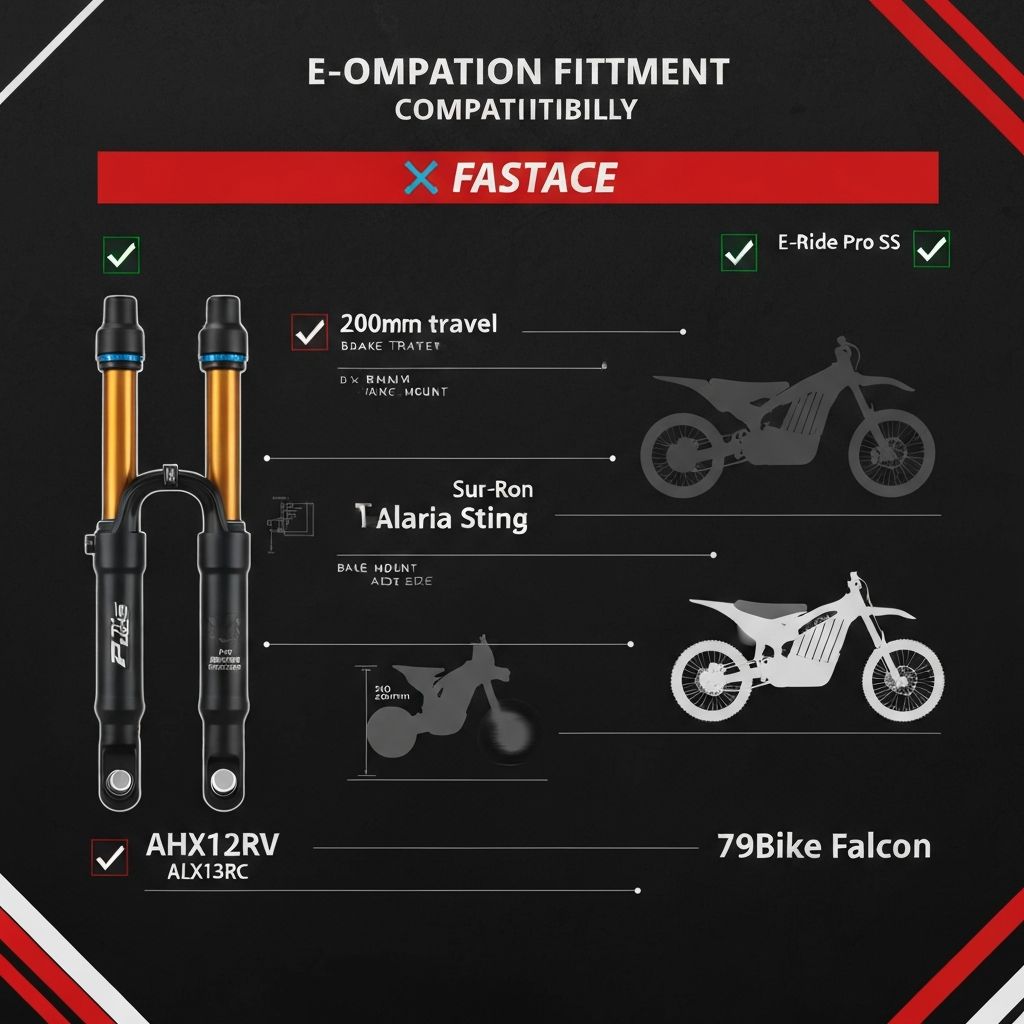
Fastace Suspension Fitment Guide for Talaria, E-Ride Pro, Sur-Ron and 79Bike Falcon
Check Fastace suspension fitment for Talaria Sting, E-Ride Pro SS, Sur-Ron Light Bee and 79Bike Falcon. Compare AHX12RV, ALX13RC, wheel size, brake mount, triple clamp and spring rate before ordering.